Throwing Shapes

2nd SARA Statistics Winter School, 23-27 Jan 2026

Idealised Distributions

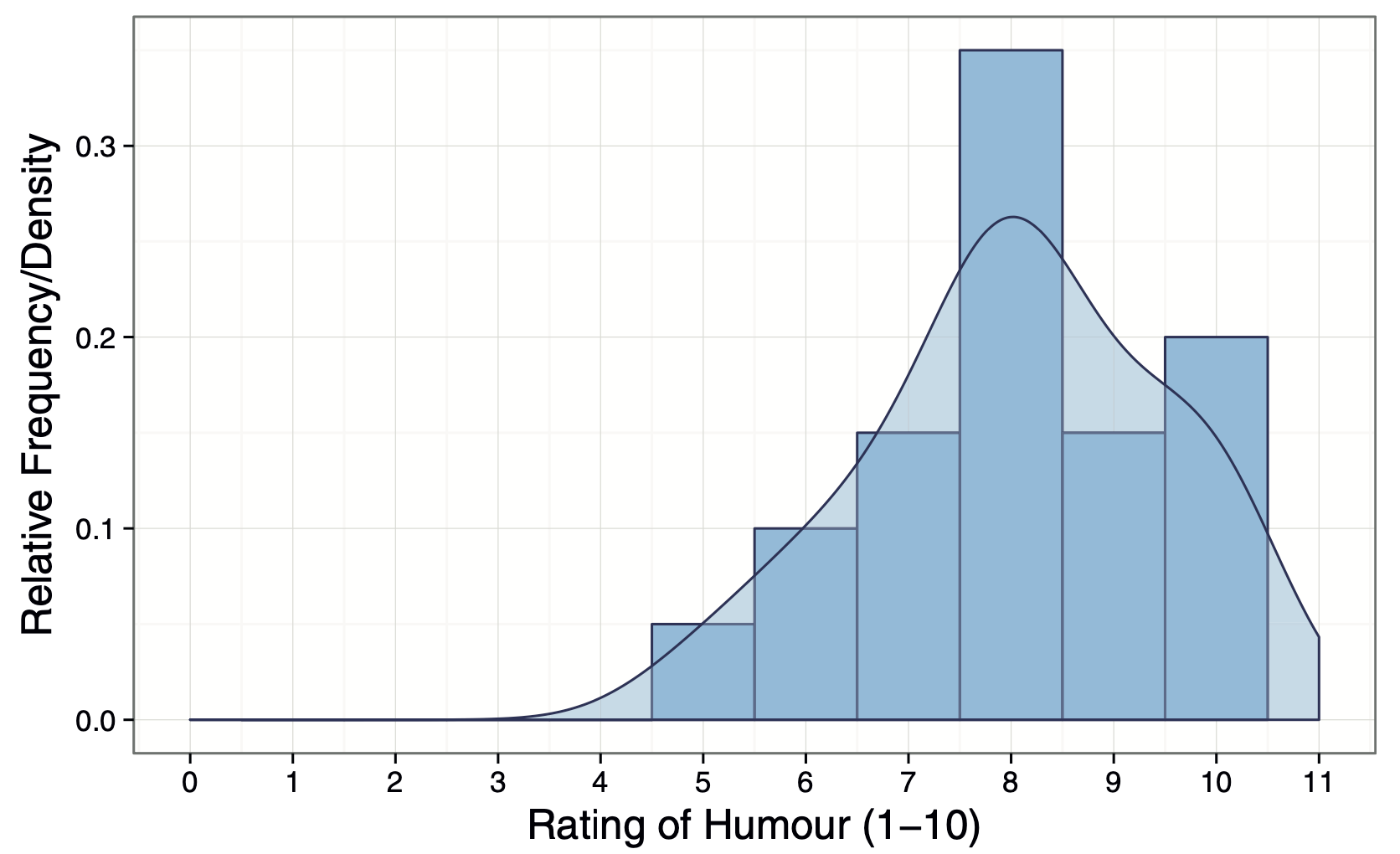
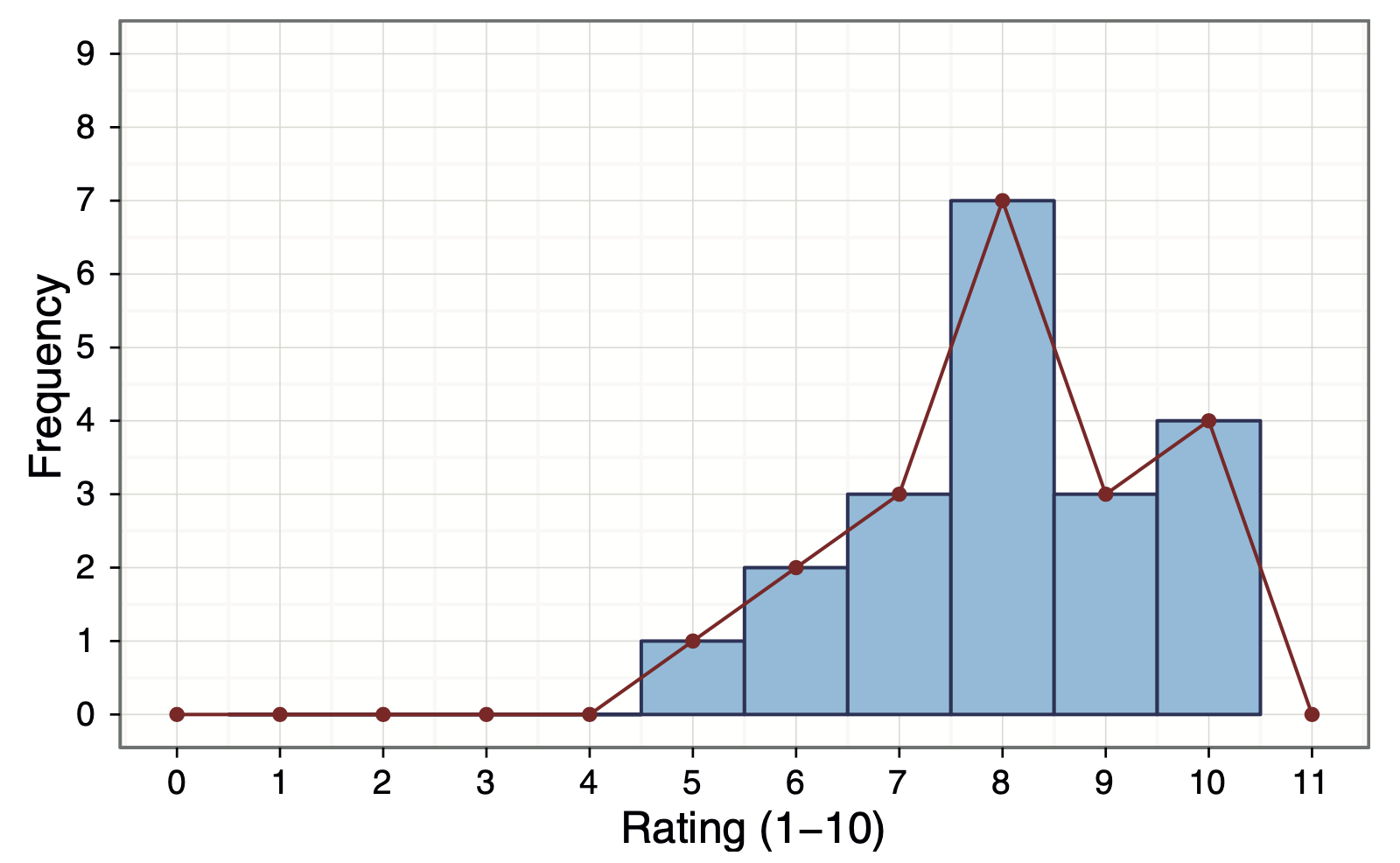
  • The beauty of data is that we can use samples to estimate the shape of the distribution of scores in the entire population.

Relative Frequencies

  • It is reasonable to assume that the relative frequencies in the sample will be similar to those in the population.

  • We do not need to know the actual frequencies in the population, we work instead with relative frequencies.

Probability Distribution

Common Distributions

  • Common shapes of distributions are
    • normal distribution,
    • \(t\)-distribution,
    • \(chi-square\) (\(\chi^2\)) distribution,
    • \(F\)-distribution.
  • Each have a specific shape that can be described by an equation.

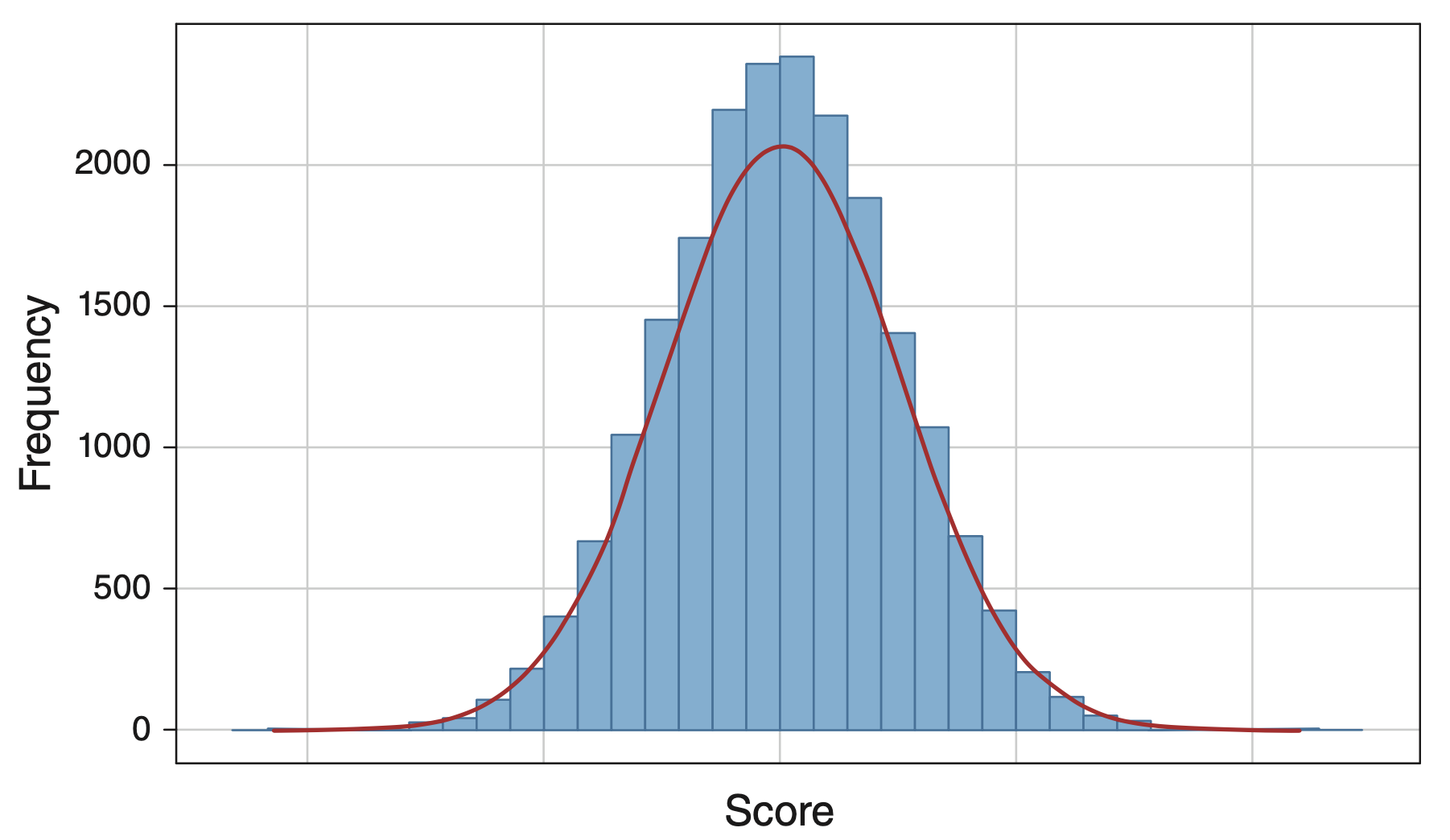
Symmetrical/Normal Distribution

The curve is symmetrical if we draw a vertical line through the centre of the distribution then it looks the same on both sides.
Shape of the Distribution

  • Central Tendency: Mean determines the center of the distribution

  • Variability: Standard deviation width or spread of the distribution.

  • 68-95-99.7 Rule:

    • 68% of data falls within ±1σ of the mean.
    • 95% within ±2σ.
    • 99.7% within ±3σ.

Practice

  • Plot the Normal Distribution

  • Central Tendency and Variability

  • Visualizing Central Tendency

  • Interpret the Results

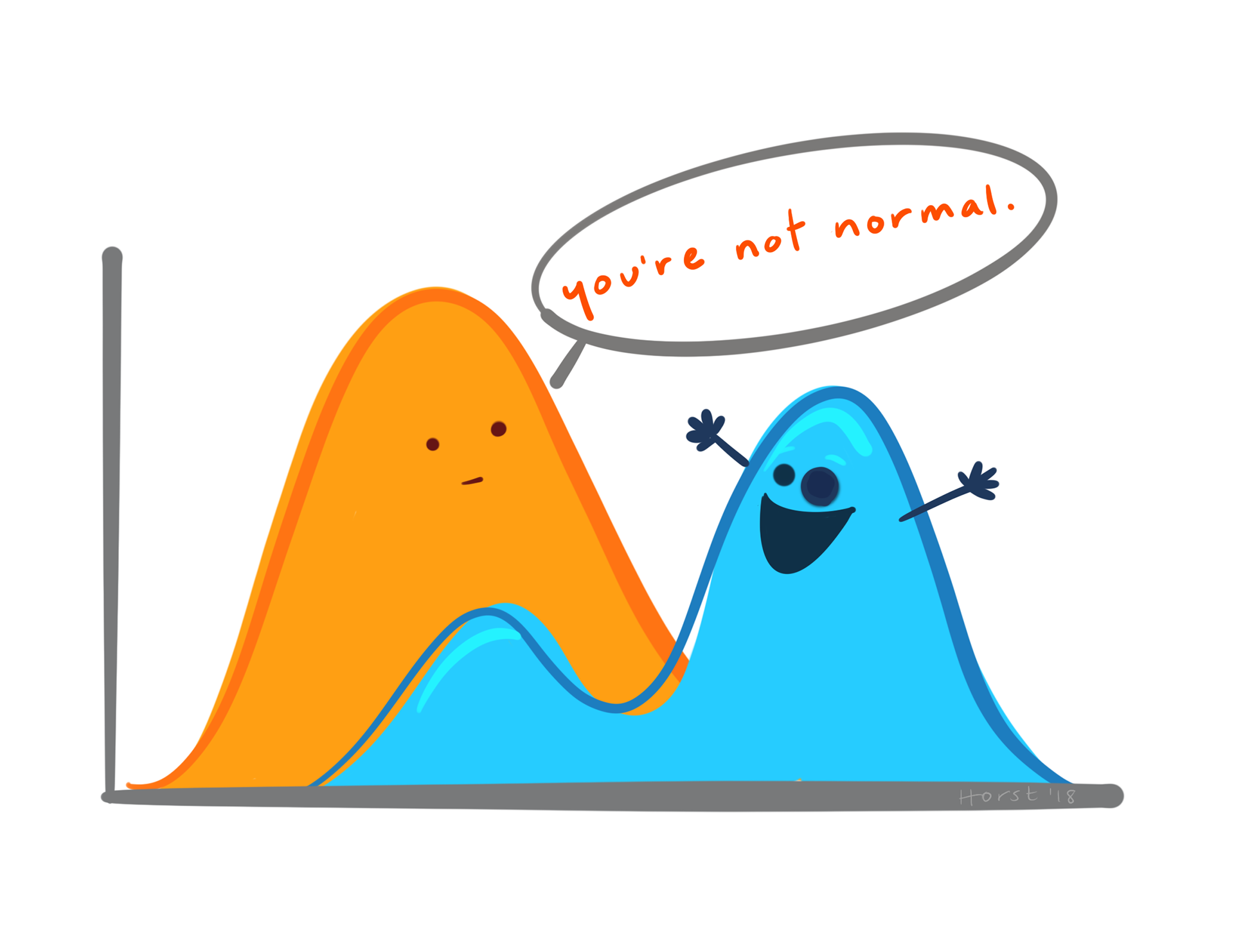
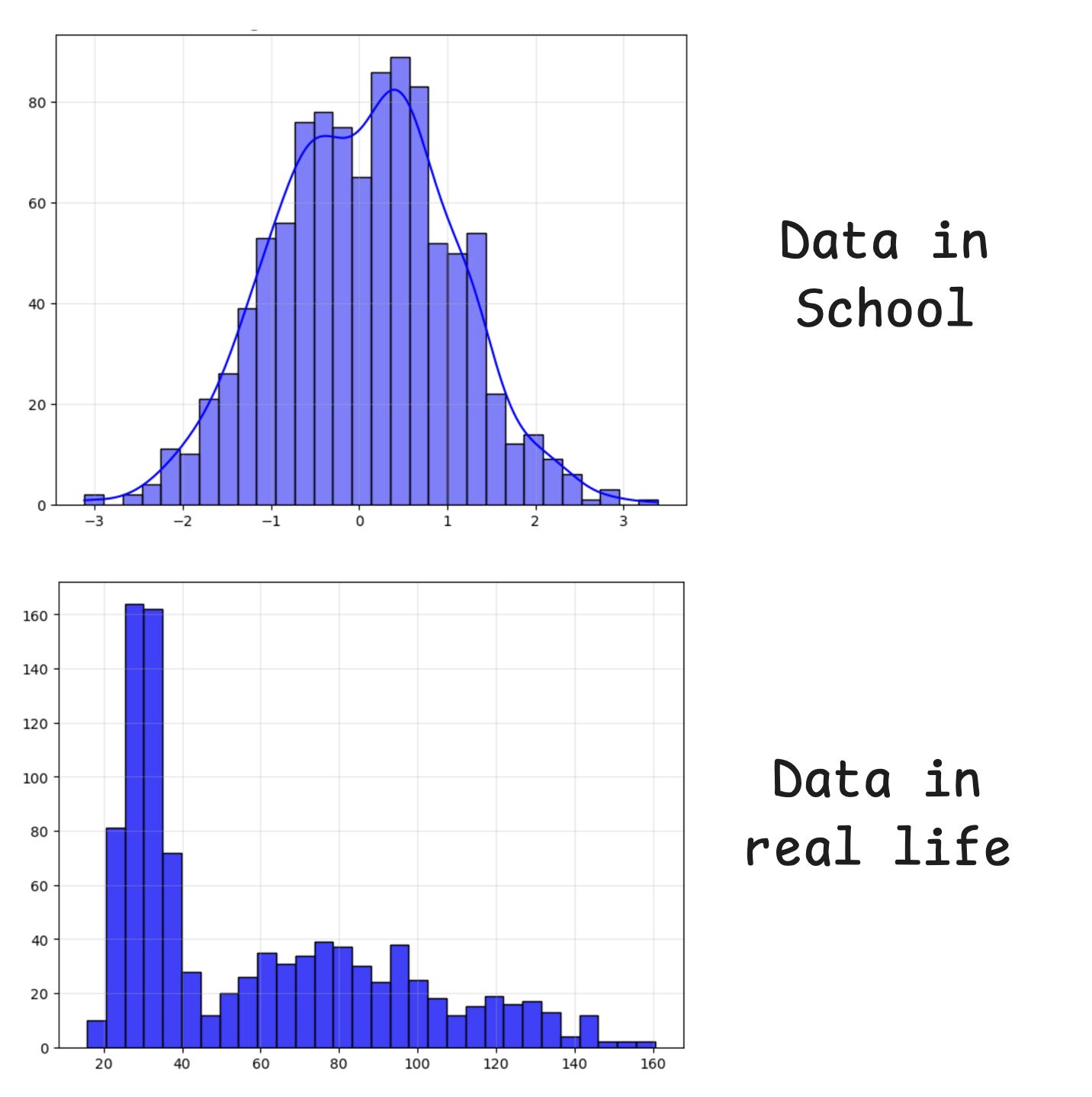
All Distributions are not “normal”

Real Life Data
Skewness

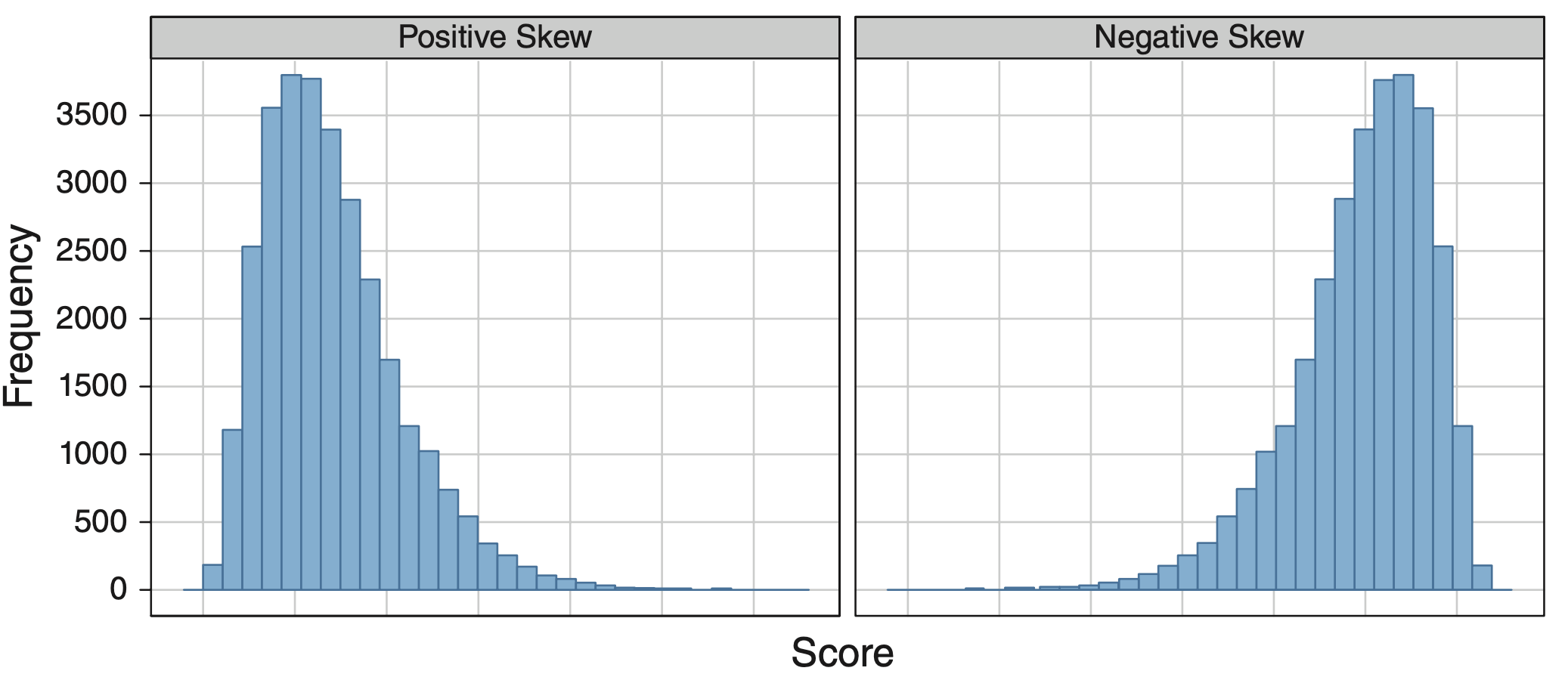
Skewness measures the asymmetry of a distribution around its mean.
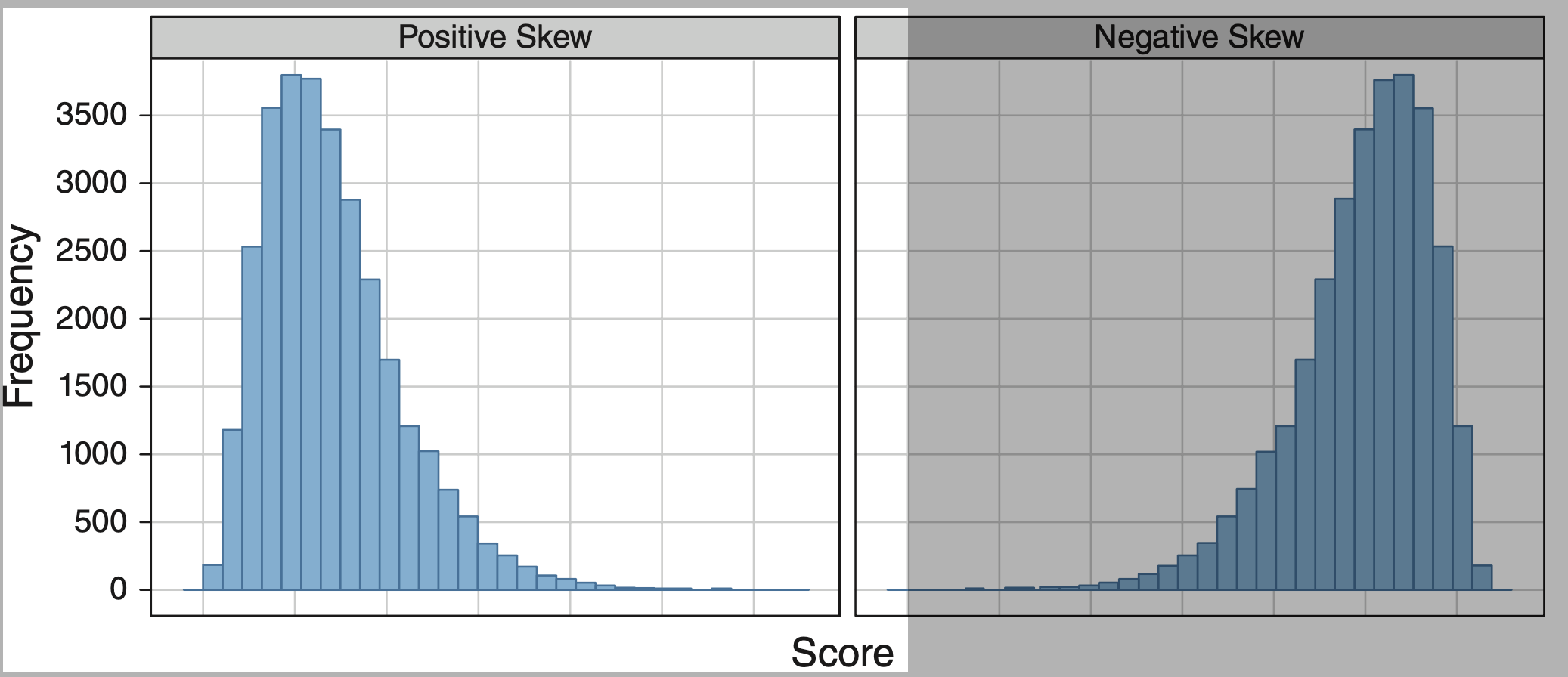
Positive Skew

“A longer tail on the right side.”
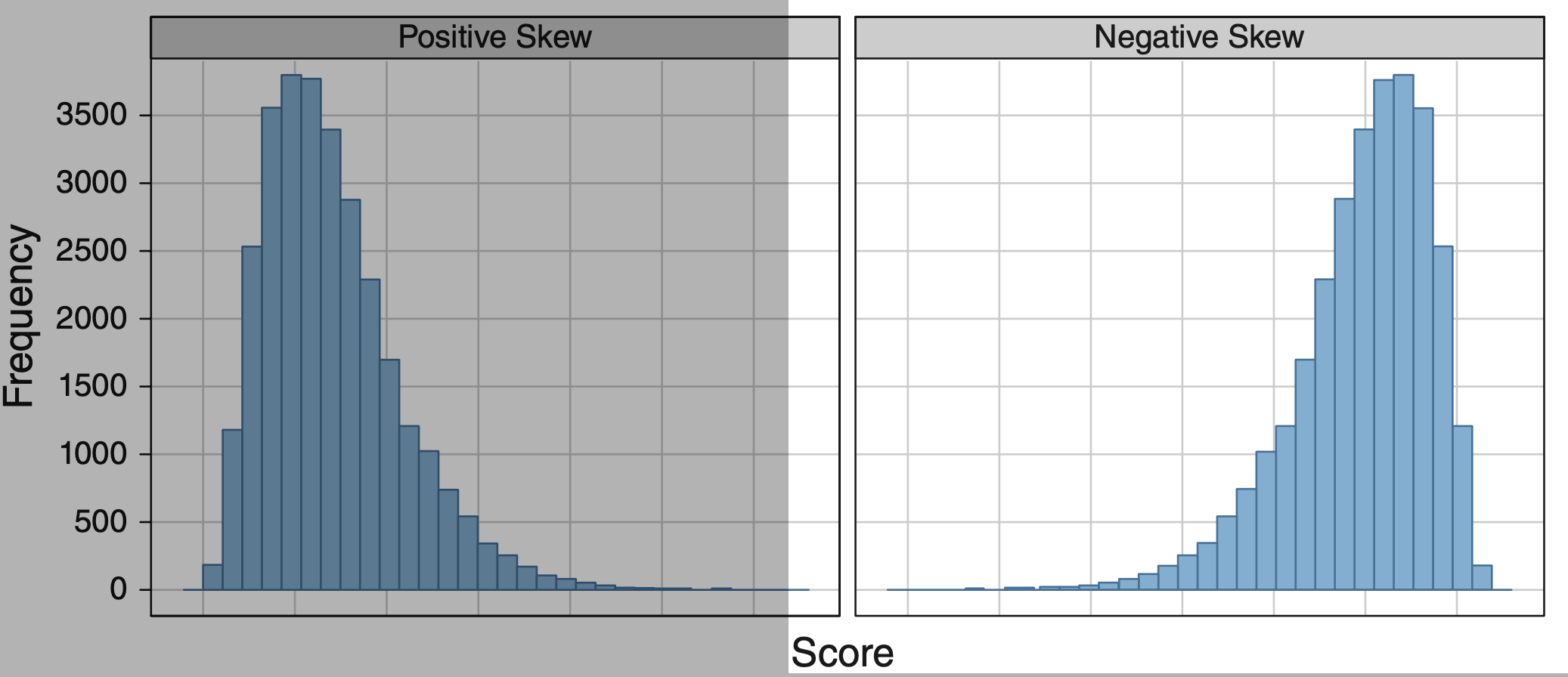
Negative Skew

A longer tail on the left side.
Kurtosis

Kurtosis measures the “tailedness” or sharpness of a distribution.
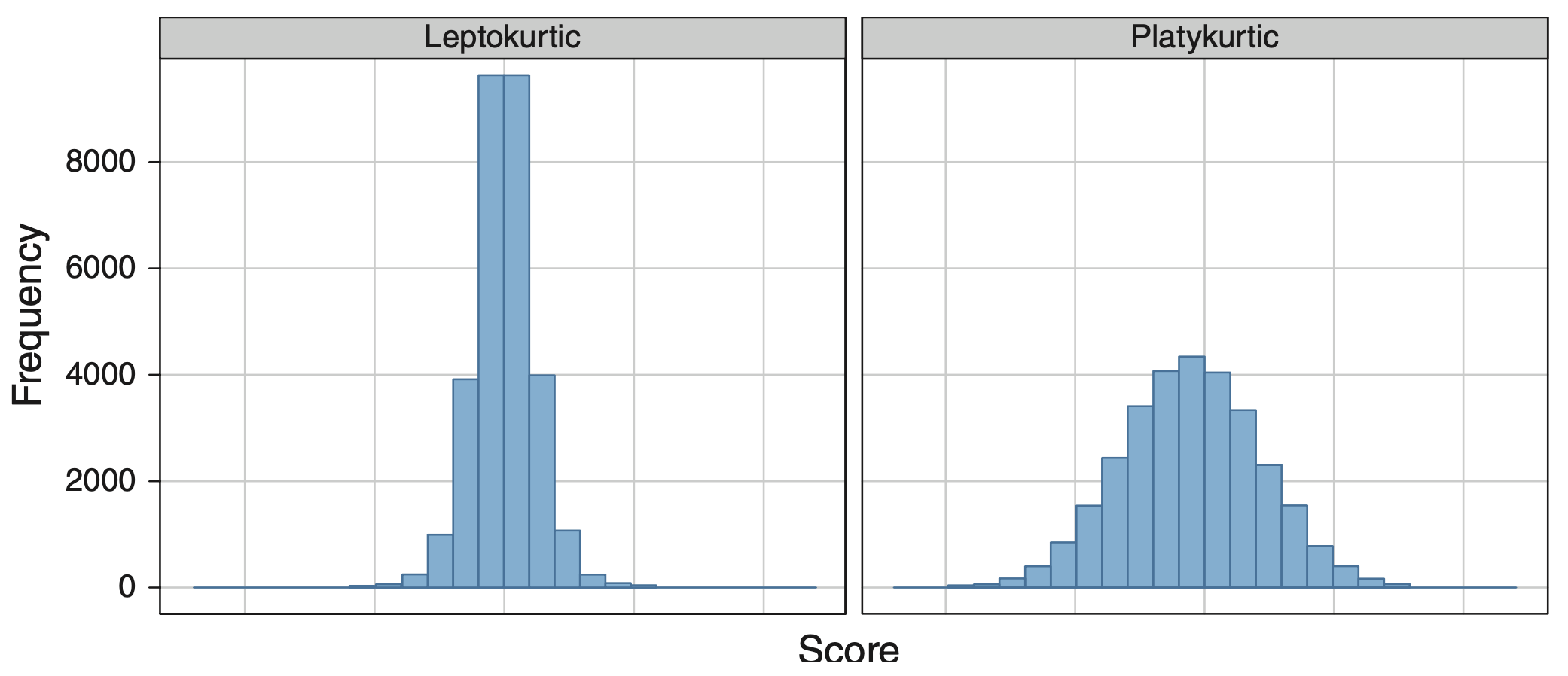
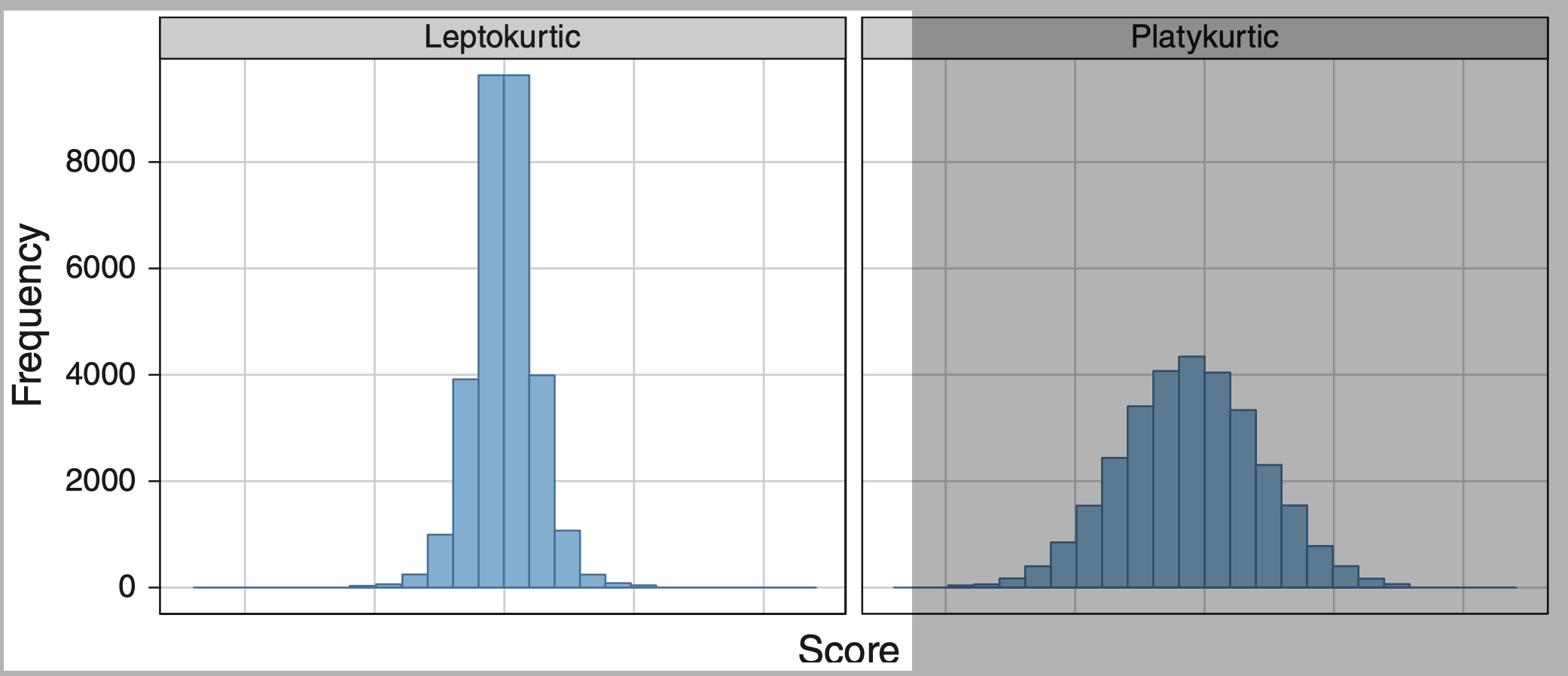
Leptokurtic

Heavy tails and sharp peak.
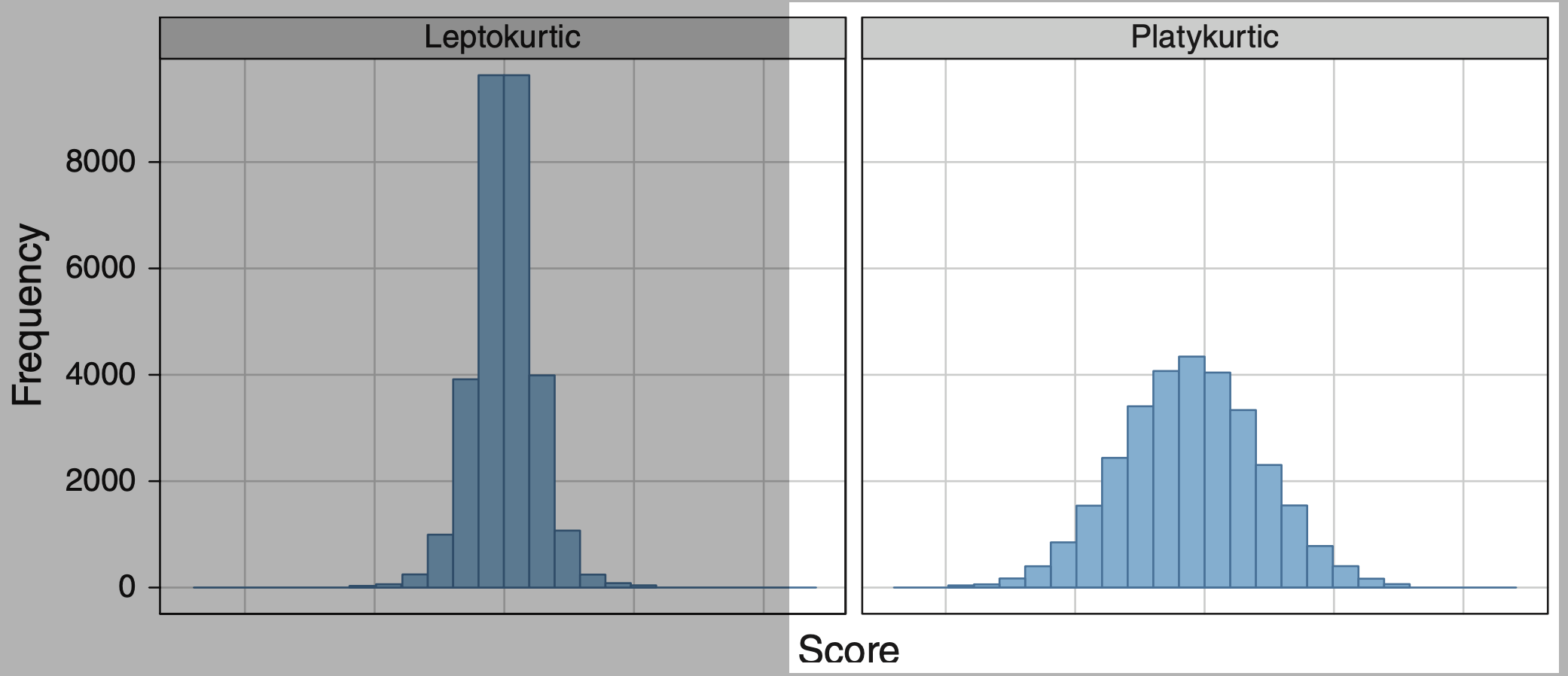
Platykurtic

Light tails and flatter peak.
Practice

Skewness

  • Symmetric Distribution: Skewness = 0.

  • Positive Skew: Tail on the right; Skewness > 0.

  • Negative Skew: Tail on the left; Skewness < 0.

Kurtosis

  • Mesokurtic: Normal distribution, Kurtosis ≈ 3.

  • Leptokurtic: Heavy tails, Kurtosis > 3.

  • Platykurtic: Light tails, Kurtosis < 3.

References